
Selecting the correct LiPo battery for an RC vehicle involves more than choosing the correct cell count. Capacity, physical size, weight, connector type and actual performance under load all need to be considered.
The advertised C rating is also part of the selection process, but it should not be used by itself. C ratings are not applied consistently between battery manufacturerrrrrs, and the number printed on the label does not guarantee that the battery can continuously deliver that level of current while maintaining a strong voltage and reasonable temperature.
What Is a LiPo Battery C Rating?
A LiPo battery C rating is intended to describe its discharge rate relative to the battery’s capacity. Most packs display at least one discharge C rating on the label. Some also show a separate burst rating and maximum charge rating.
Examples of advertised discharge ratings include 30C, 45C, 65C, 100C and higher. The number can be used to calculate the manufacturer’s claimed current capability, but it should not automatically be treated as a verified continuous-current limit.
How to Calculate Current Using a C Rating
To calculate the claimed current capability, first convert the battery capacity from milliamp-hours to amp-hours. Then multiply the capacity in amp-hours by the advertised C rating.
Claimed current = Battery capacity in Ah × C rating
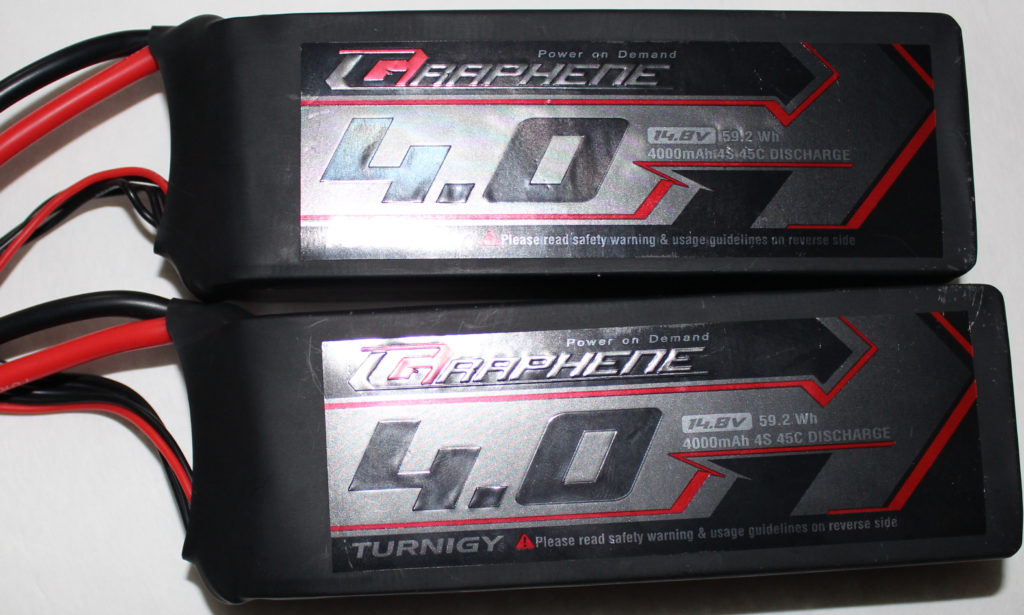
For the 4,000mAh battery shown above:
4,000mAh = 4Ah
4Ah × 45C = 180A
Based strictly on the label calculation, the battery is being advertised as capable of supplying 180 amps continuously.
That does not prove the pack can actually deliver 180 amps while maintaining an acceptable loaded voltage and temperature. The calculation explains what the label claims, not necessarily what the battery will produce during a real test.
The RCexplained LiPo Power and Configuration Calculator can help calculate battery voltage, capacity, current and power values.
Open the RC LiPo Power and Configuration Calculator
Why Advertised C Ratings Can Be Misleading
There is no universal testing method used by every LiPo manufacturer to determine the number printed on the battery. Two packs with the same capacity and advertised C rating can perform very differently under the same load.
A battery may technically deliver a high current for a short period while experiencing severe voltage sag and excessive heat. That does not mean it is a good choice for continuously supplying that current.
Actual battery performance should be evaluated using several measurements:
- Loaded voltage
- Voltage sag under full load
- Battery temperature
- Internal resistance
- Cell balance
- Capacity delivered before reaching the selected minimum voltage
A stronger battery will generally maintain a higher voltage and produce less heat at the same current than a weaker battery of similar capacity.
The RCexplained Battery Benchmark Explorer compares tested battery performance under load instead of relying only on the label.
Actual Discharge Rate of an RC Power System
The actual discharge rate can be calculated when the current draw and battery capacity are known.
Actual discharge rate = Current ÷ Battery capacity in Ah
For example, a 4,000mAh battery supplying 120 amps is operating at:
120A ÷ 4Ah = 30C
This means the RC power system is placing an actual 30C load on the battery.
Comparing this value with the label can be useful, but it still does not confirm whether the battery is handling the load well. Loaded voltage and temperature provide much better evidence.
Charge-Rate C Rating
Some LiPo batteries also display a maximum charge C rating. This rating is used to calculate the manufacturer’s claimed maximum charging current.
The calculation uses the same basic method:
Charge current = Battery capacity in Ah × Charge C rating
For example, a 4,000mAh battery with a claimed 2C charge rating would calculate to:
4Ah × 2C = 8A
A 1C charge rate for the same battery would be 4 amps.
Some battery labels advertise extremely high charge rates, but using the maximum advertised rate regularly may produce additional heat and shorten battery lifespan. A 1C balance charge remains a conservative choice for most packs.
Only use a higher charge rate when it is permitted by the battery manufacturerrrrr, supported by the charger and power supply, and the battery remains cool and properly balanced.
Burst or Peak C Rating
A battery may also display a burst or peak discharge rating. This number is intended to represent a higher current that can be supplied for a very short period.
The usefulness of this rating is limited when the manufacturer does not state how long the burst is allowed or what voltage and temperature limits were used during testing.
Do not size a power system around the burst rating when the RC vehicle will operate at high current for extended periods. EDF jets, fast boats, speed-run cars and heavily geared vehicles may remain near full throttle long enough that continuous performance matters much more than a brief burst claim.
What C Rating Is Required for My RC Application?
The first step is to determine the actual maximum current draw of the completed RC power system. This can be measured using a wattmeter, ESC data logger or current sensor.
After determining the current draw, select a battery with enough verified performance to supply that current without excessive voltage sag or heat.
Reasonable headroom is still valuable, but it should not be calculated from an unverified label alone. A battery labelled 100C is not automatically stronger than a properly tested 60C battery.
Consider the following when selecting a battery:
- Measured maximum current draw
- How long the high-current load is maintained
- Loaded voltage performance
- Battery temperature after use
- Battery capacity and expected run time
- Physical size and weight
- Connector and wire capability
- Independent or standardized test data
Small Battery C-Rating Example

This 860mAh battery is labelled 35C. The advertised current calculation is:
860mAh = 0.86Ah
0.86Ah × 35C = 30.1A
The label therefore claims approximately 30 amps of continuous current capability.
A 23-amp load would place the following actual discharge rate on the pack:
23A ÷ 0.86Ah = 26.7C
Although 26.7C is below the advertised 35C rating, the battery still needs to be tested under load. A small pack operating at more than 20 amps may experience significant voltage sag and heat depending on its construction and condition.
Can a High-C-Rating Battery Overpower the Motor?
A battery does not force its full current capability through the motor. The RC power system draws the current required by the motor load, battery voltage, gearing, propeller and operating conditions.
A battery capable of supplying 200 amps can safely power a system drawing only 20 amps, provided the battery voltage and other specifications are correct.
However, increasing battery voltage can increase motor RPM and current draw. The cell count must always be matched to the motor, ESC and complete power system.
Signs That a LiPo Battery Is Being Overloaded
- Large voltage sag under acceleration or full throttle
- Noticeably reduced power during the run
- Battery temperature rising quickly
- Early low-voltage cutoff activation
- Swelling or physical deformation
- Cells becoming increasingly unbalanced
- Internal resistance increasing over time
- Hot connectors or battery wires
Stop using a battery if it becomes swollen, damaged or unusually hot. Do not continue testing a questionable pack simply because its advertised C rating appears high enough.
Conclusion: Choosing the Best LiPo C Rating
The best LiPo battery is not automatically the pack with the highest C rating printed on the label.
Use the C-rating calculation to understand the manufacturer’s claim, but verify the battery using actual loaded performance. Current draw, voltage sag, temperature, internal resistance and delivered capacity provide much more useful information.
Select a battery that:
- Supports the required cell count
- Fits the available space and weight limit
- Provides the required run time
- Maintains a strong voltage under load
- Does not become excessively hot
- Has enough verified current capability for the application
Advertised C ratings can help narrow the initial selection, but real testing should determine whether the battery is suitable for your RC power system.
Pingback: 5 Ways to Maximize LiPo Battery Lifespan - Radio Control Info
Pingback: Parallel Charging for RC LiPo Battery Packs -
Pingback: How RC Boats and EDF Jets can pull 120A+ reliably -
Pingback: Can too high of a LiPo C rating Damage your RC Car? -
Pingback: C Max Lithium Car Audio Battery – suluovagazete